

“You could buy a car for that!” It’s a comment we hear every now and again when customers or social media followers see the price tag of a high-end bike.
It’s true, you could buy a car for the same price as some bikes.
But would that buy you a fully loaded rally car that will take corners at 80mph and go from 0 to 60mph in less than two seconds?
The answer is “no”. That’s more likely to set you back £200,000 – up to £1,000,000 in the top tier – because of all the high performance components and equipment that go into making it.
Just like cars, not all bikes are created equal. So, why do some mountain bikes cost more than others? Allow us to explain!
What contributes to the cost of a mountain bike?
To the uninitiated, the reason some mountain bikes cost several thousand pounds must seem like a complete mystery. But if you want a bike that can handle corners with confidence, an electric motor with more power, and suspension that travels further – that’s all going to add up.
And if you want it all to last longer and to weigh less – there’s a cost to that too.
Literally every part of a mountain bike could be budget, mid-range or high performance – whether it’s the suspension, gears, brakes, electric and electronic components, wheels or tyres. If you’re looking for a human-powered bike for gentle rides along smooth paths, the starting price will be in the low hundreds. But if you want a machine that will withstand the impacts of rocks and roots on a forest trail, absorbing those bumps so you’re more comfortable, and then powering you back to the top of the hill to save your legs – well, that’s going to need a more generous budget.
Suspension: The Key to Smooth Rides
One of the most significant factors contributing to the price of mountain bikes is the suspension system, with the top-of-the-line forks from manufacturers like RockShox, Fox and Manitou costing well over £1,000. Different bikes come with various suspension types, including spring, air and the premium Kashima coating. Spring suspension, typically found in entry-level bikes, offers basic shock absorption. Air suspension, on the other hand, provides more adjustability and a lighter feel. Then there’s Kashima, a proprietary coating known for its enhanced durability and smoother performance, which really is another level of performance and longevity. The thickness of the stanchions – the two parallel tubes that head down into the moving part of the fork – and the amount of travel also affect the overall cost, with larger stanchions and increased travel adding to the price tag.
Components: Precision in Every Part
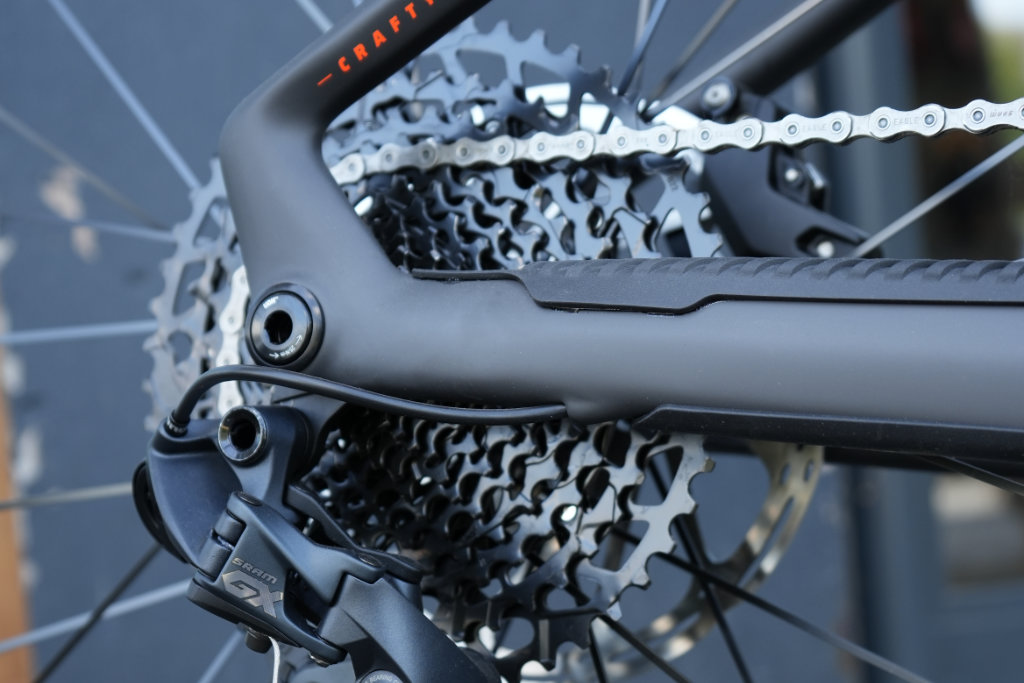
When it comes to components, every detail matters. Brakes and gears play a crucial role in the bike’s performance. High-end mountain bikes often feature top-tier brake systems like hydraulic disc brakes, offering unparalleled stopping power and improved modulation (the way braking increases as you apply more force to the lever). Disc brakes simply work better and last longer than basic rim brakes. Similarly, precision gear shifting is achieved through advanced drivetrain components, such as Shimano XTR or SRAM X01. Superior gears will do what you ask them to do, even under the strain of hard pedalling up a steep hill, sparing you the awful slipping and grinding you’re more likely to experience with a lower cost option.
Weight: The Battle Against Gravity
Weight is a major factor in the price tag of a mountain bike. Lighter bikes offer improved agility and responsiveness on the trail, so they handle better and are less demanding on your legs. The choice between alloy/aluminum and carbon fibre frames greatly influences the bike’s weight and, subsequently, its price. Carbon is significantly lighter than aluminium and requires more working in the manufacturing process so it’s more expensive like for like. Additionally, components like carbon wheels from brands like DT Swiss and Mavic further reduce weight while maintaining strength and durability, though at a higher cost.
Electronic Components: Pushing the Boundaries
Electronic components are becoming better and more affordable all the time, with the technology recently trickling down to Shimano’s mid-level 105 range for road. Electronic gears offer very precise shifting and can be configured to your exact requirements via an app, skipping two, three or more cogs with a longer press on the gear shifter. The best electronic gears – like SRAM’s new T-Type range – are incredible. They just work, even under huge strain. Dropper posts are another popular electronic component, allowing riders to adjust saddle height on the fly, for better comfort and control.
One other reason why electronic components are popular is the reduction in cables. There’s no need for a tangle of black running from the handlebars along the frame to the gears and seatpost. But, as well as being an aesthetic thing, they are also practical, reducing the need for maintenance of mechanical parts.
E-Bike Systems: Powering Up the Ride

The emergence of e-bike systems has revolutionised mountain biking, offering riders an extra boost to conquer challenging terrain and helping them enjoy the ride for longer. More powerful motors like Bosch Performance Line CX and Yamaha PW-X3 deliver 85Nm of torque. That’s more than double the assistance of the kind of motor you might find on some e-hybrid bikes, for example, which are made for lighter tracks or city riding. Naturally, bikes equipped with advanced and powerful e-bike systems command a higher price due to their superior performance and technology. The same goes for the battery. If you want one that will give you a hefty boost up the mountain for hour after hour, you’ll need a higher capacity battery, with some manufacturers now making them up to 750Wh.
Your decision on how much you want to spend on your new mountain bike will mostly come down to two factors: Your budget and how seriously you take mountain biking. Superior, more expensive components will last better and will make you faster, improve your ride experience and keep you going for longer. Of course, there are increments, so you don’t have to go straight from budget to premium; there are fantastic bikes at all levels.
Come and see our team in store in Keswick, where we’ll talk to you about what kind of riding you enjoy and help you decide on the right bike for you.
*Look out for the next in our bike price explainer series: Road bikes